Single review
ThinkFun Circuit Maze Review
Reviewed from the manufacturer's published specifications and the arithmetic on them. We have not used it, and we say so.
By Sawyer V. · Published
The short answer
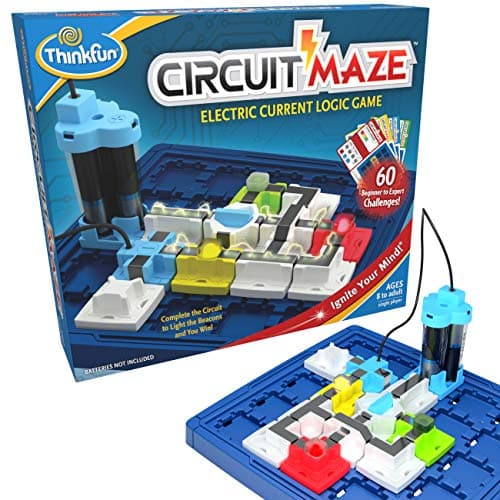
ThinkFun Circuit Maze publishes 60 challenges from beginner to expert, a beam-and-token circuit-puzzle format with real working LEDs, single player, batteries required and not included, rated age 8 and up. The LED lighting up is the self-check, and it is the whole appeal.
Block & Beaker earns a commission when you buy through our links, at no cost to you. It never changes a ranking, and we say so plainly when the right answer is the cheaper set, or nothing at all. Full disclosure · How we pick.
At a glance
The picks, ranked
Tap any row to jump to the full reasoning. Prices come live from Amazon where we have them and read “check price” where we don’t — never a number we cannot stand behind today.
| # | Product | Best for | Price |
|---|---|---|---|
| 1 | The product ThinkFun Circuit Maze Sixty self-checking challenges where a real circuit either completes or does not. | Eight and up, as the bridge between logic games and electronics | |
| 2 | 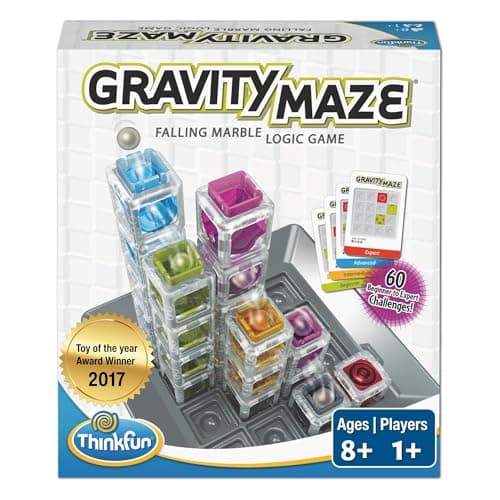 The sibling game ThinkFun Gravity Maze 60 challenges with the same self-checking idea, using a marble instead of a light. | Eight and up, for trajectories rather than circuits | |
| 3 | 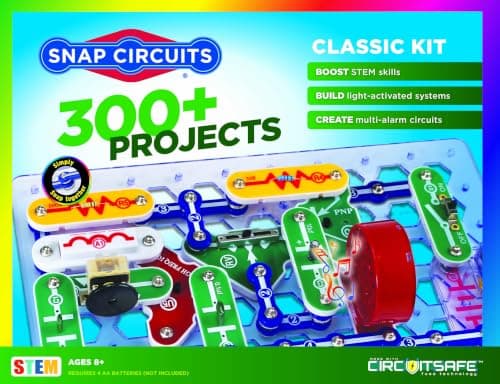 The next step Snap Circuits Classic 305 published projects from 60+ parts, with no correct answer to run out of. | Eight and up, when puzzles become construction | |
| — | 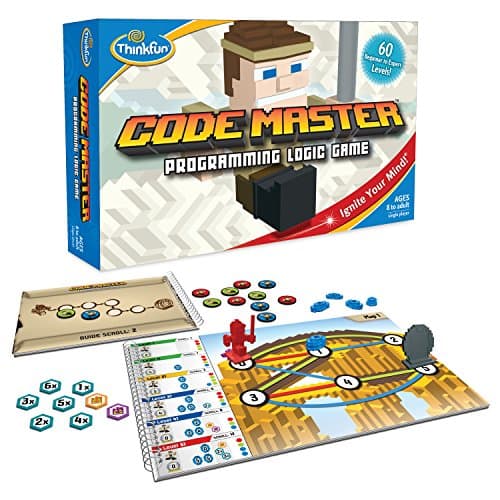 Same shelf, different subject ThinkFun Code Master 60 levels of map-based sequencing, with no batteries and no electronics. | Eight and up, for programming logic |
4 picks, including 1 we tell you to skip. Ages shown are the manufacturer’s own rating, not ours.
What we can tell you, and what we cannot
We have not played it. No lab, no samples, no test children, and no star rating on this page or in its structured data.
Published challenge counts, format, player count and age rating we can report. How bright the LEDs are, and which battery size it takes, we cannot — ThinkFun publishes that batteries are required without a size we can quote, so we do not quote one.
The specification that decides it
The arithmetic
ThinkFun Circuit Maze, published
| Challenges | 60, beginner to expert |
|---|---|
| Format | Beam-and-token circuit puzzles with real working LEDs |
| Players | 1 |
| Batteries | Required, not included |
| Stated age | Age 8 and up |
| Consumables | None |
What the numbers mean in practice
Self-checking with a light beats self-checking with a booklet. A child cannot argue with an LED, and they do not have to wait for anyone to confirm it. That combination is why single-player games get used on the days parents most need them to.
Sixty challenges is a published ending. Treat it as roughly 30 to 40 real sittings after the tutorial levels and the ones that never get solved.
Batteries are the one friction point. Every other logic game in this category needs nothing. Here a flat cell means the self-check stops working, which is the whole mechanism.
The transfer to real electronics is genuine. Understanding that a circuit must form a complete loop is the single idea a beginner most needs, and 60 puzzles is a thorough way to arrive at it.
Say the unwelcome thing
Do not buy it without checking the batteries first
ThinkFun publishes batteries as required and not included. On a game whose entire feedback mechanism is a light, that is not a minor omission — a dead cell turns a self-checking puzzle into a guessing game.
Who should skip it
A child under eight. The published rating is 8 and up and the spatial reasoning is real.
A household that wants nothing else to need batteries. Gravity Maze is the same idea, same maker, same 60 challenges, and needs none.
Two children. Published as single player, with one board.
Where it sits
Circuit Maze appears in logic puzzles compared, games for one player and electronics starter kits.
In full
Every pick, and what is wrong with it
Published specifications only, each linked back to the page it came from. Where a manufacturer publishes nothing, the row says so — we do not fill blanks in.
1. The product
ThinkFun Circuit Maze
ThinkFun · 1008 · maker rates it 8+
Sixty self-checking challenges where a real circuit either completes or does not.
- Stated age
- “age 8 and up”
- Players
- 1
- Format
- Beam-and-token circuit puzzles with real working LEDs
- Batteries
- Required (not included)
ThinkFun publishes 60 challenges from beginner to expert, a beam-and-token circuit-puzzle format with real working LEDs, single player, age 8 and up, with batteries required and not included.
The LED is the review. On a flat puzzle, a child checks their answer against a booklet. Here the circuit either completes and lights or it does not, which is an unarguable, immediate and satisfying verdict that needs no adult.
It is also the only logic game on this site that teaches a second subject. The puzzle is spatial reasoning; the payoff is a working circuit, and a child who has done 60 of these arrives at a Snap Circuits set already understanding that a circuit must be a complete loop.
Replay signal
- Open-ended or one-shot
- Finite challenge deck, but the pieces make a real circuit — free building afterward is possible
- Does anything run out
- Nothing runs out
- Room to grow
- Pairs naturally with a Snap Circuits set as the step from puzzle to real components
Why we say so: ThinkFun publishes the 8+ rating, the 60 challenges and the single-player circuit-puzzle format with working LEDs. The pairing with Snap Circuits is our routing advice and is stated as advice, not as a manufacturer claim.
What’s wrong with it
Batteries required and not included, which nothing else in this category needs.
| Stated age | “age 8 and up” |
|---|---|
| Players | 1 |
| Format | Beam-and-token circuit puzzles with real working LEDs |
| Batteries | Required (not included) |
| Challenges | 60, beginner to expert |
Every figure above is from ThinkFun, Circuit Maze. Blanks are shown as “not published” rather than filled in.
2. The sibling game
ThinkFun Gravity Maze
ThinkFun · 44001006 · maker rates it 8+
60 challenges with the same self-checking idea, using a marble instead of a light.
- Challenges
- 60, beginner to expert
- Contents
- Game grid, 9 towers, 1 target piece, 3 marbles, 60 challenge cards
- Players
- 1
- Batteries
- None
ThinkFun publishes 60 challenges from beginner to expert, a grid with 9 towers, 1 target piece and 3 marbles, single player, rated 8+, no batteries.
The two are a natural pair — same maker, same rating, same 60-challenge structure, different subject. Buying both gives a child 120 self-checking puzzles.
Replay signal
- Open-ended or one-shot
- Finite by design — 60 challenges, and a determined child will finish them
- Does anything run out
- Nothing physically runs out, but the challenge cards do end
- Room to grow
- The towers can be used freely once the cards are done, though nothing in the box prompts that
Why we say so: ThinkFun publishes 60 challenges and a fixed component list. Sixty is a real number with a real end, and single-player puzzle games are the category where that matters most — better to know before you buy it as the main present.
What’s wrong with it
No batteries needed — which here is an advantage.
| Challenges | 60, beginner to expert |
|---|---|
| Contents | Game grid, 9 towers, 1 target piece, 3 marbles, 60 challenge cards |
| Players | 1 |
| Batteries | None |
| Stated age | Ages 8+ |
| Consumables | None |
Every figure above is from ThinkFun, Gravity Maze. Blanks are shown as “not published” rather than filled in.
3. The next step
Snap Circuits Classic
Elenco · SC-300 · maker rates it 8+
305 published projects from 60+ parts, with no correct answer to run out of.
- Projects
- “Build over 300 exciting projects” — manual covers projects 1-305
- Parts
- “Contains over 60 Snap-Together parts”
- Projects per part
- 5.1 — the highest ratio in the line
- Stated age
- “Ages 8+” and “Not for Children under 3 yrs.”
Elenco publishes over 300 projects with the manual covering 1-305, over 60 snap-together parts and a 5.1 projects-per-part ratio, rated 8+.
Circuit Maze has 60 answers; Snap Circuits has none. That is the difference between a puzzle and a construction system, and it is the right order to meet them in.
Replay signal
- Open-ended or one-shot
- The sweet spot of the line — enough parts to invent with, cheap enough not to be an event
- Does anything run out
- Nothing runs out
- Room to grow
- 305 published projects is years of Sunday afternoons at one a week
Why we say so: Elenco publishes 305 numbered projects against 60+ parts. Five projects per part is the highest ratio anywhere in the Snap Circuits line, which is the arithmetic reason this is the set to buy rather than the cheap one or the big one.
What’s wrong with it
Four AA batteries, and it is a much larger commitment.
| Projects | “Build over 300 exciting projects” — manual covers projects 1-305 |
|---|---|
| Parts | “Contains over 60 Snap-Together parts” |
| Projects per part | 5.1 — the highest ratio in the line |
| Stated age | “Ages 8+” and “Not for Children under 3 yrs.” |
| Batteries | “Requires 4 ‘AA’ batteries (not included)” |
| Relationship to SC-100 | Manual includes all SC-100 projects plus 200 new ones |
Every figure above is from Elenco, Snap Circuits Classic. Blanks are shown as “not published” rather than filled in.
Skip this one
ThinkFun Code Master
ThinkFun · 1950 · maker rates it 8+
60 levels of map-based sequencing, with no batteries and no electronics.
- Levels
- 60, beginner to expert
- Players
- 1
- Format
- Map-based programming logic — sequence the avatar's moves to collect power crystals
- Batteries
- None
ThinkFun publishes 60 levels from beginner to expert, map-based programming logic, single player, no batteries, rated 8 and up.
We flag it as the alternative rather than the substitute. If a child needs a visible result to stay engaged, Circuit Maze’s LED does something Code Master’s cardboard cannot.
Replay signal
- Open-ended or one-shot
- Finite — 60 levels, and they are worked through in order
- Does anything run out
- Nothing runs out, but the level book does end
- Room to grow
- The later levels introduce conditionals and loops, so the concept ladder is real rather than cosmetic
Why we say so: ThinkFun publishes 60 levels from beginner to expert and a map-and-sequence format. The concepts the later levels introduce — branching and repetition — are the same two ideas that make a real program, which is why this works as preparation for a screen rather than as a substitute for one.
What’s wrong with it
Nothing physically happens when a level is solved.
| Levels | 60, beginner to expert |
|---|---|
| Players | 1 |
| Format | Map-based programming logic — sequence the avatar's moves to collect power crystals |
| Batteries | None |
| Stated age | Ages 8 and up |
Every figure above is from ThinkFun, Code Master. Blanks are shown as “not published” rather than filled in.
We are not putting a buy button on this one. It is easy enough to find if you want it anyway — but we would rather send you to something that gets played with twice.
Questions people actually ask
Frequently asked
How does Circuit Maze work?
ThinkFun publishes a beam-and-token format with real working LEDs. The child arranges tokens to complete a circuit that lights the target LED — current actually flows, so the puzzle checks itself and no adult is needed to confirm an answer.
What age is Circuit Maze for?
ThinkFun publishes age 8 and up, with 60 challenges graded from beginner to expert. The rating reflects genuine spatial reasoning rather than any hazard.
Does Circuit Maze need batteries?
Yes, required and not included. That matters more here than on most toys because the LEDs are the entire feedback mechanism — a flat cell turns a self-checking puzzle into guesswork. It is the only logic game we cover that needs power.
Circuit Maze or Snap Circuits?
They are different stages. Circuit Maze publishes 60 challenges with correct answers, which teaches that a circuit must form a complete loop. Snap Circuits publishes 305 projects and no correct answer at all. Meeting the puzzle first and the construction set second is the sensible order. Snap Circuits Classic review.
Sources
Where these figures came from
Every specification on this page traces to one of these. If a manufacturer publishes nothing on a point, the page says so rather than filling the gap.
Read next
Where to go from here
Back to Reviews, or read how we pick.