Guide and picks
Math Toys by Age
A gift buyer knows the age, not the skill gap. Here is the same shelf sorted by the thing you actually know.
By Sawyer V. · Published
The short answer
At three, buy Gears! Gears! Gears! — 100 pieces, hand-cranked, published 3+. At five, MathLink Cubes publishes 100 cubes that link on all sides. At six, Osmo Genius publishes 6-10 with a Numbers game. At seven, Kanoodle publishes 200+ spatial puzzles, and at eight Code Master publishes 60 levels of sequencing.
Block & Beaker earns a commission when you buy through our links, at no cost to you. It never changes a ranking, and we say so plainly when the right answer is the cheaper set, or nothing at all. Full disclosure · How we pick.
At a glance
The picks, ranked
Tap any row to jump to the full reasoning. Prices come live from Amazon where we have them and read “check price” where we don’t — never a number we cannot stand behind today.
| # | Product | Best for | Price |
|---|---|---|---|
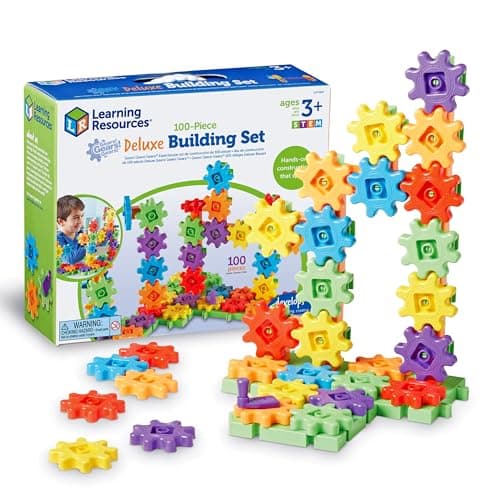
| 1 | Ages 3 to 5 Gears! Gears! Gears! 100-Piece Deluxe Building Set 100 pieces including 46 gears, hand-cranked, with no batteries at all. | Three to five, for counting things that do something | |
| 2 | 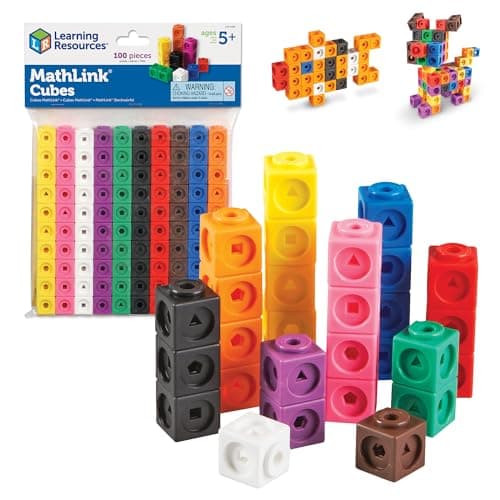 Ages 5 to 8 MathLink Cubes, Set of 100 100 cubes in 10 colors that link on all sides, with shape cut-outs for patterning. | Five to eight, as the one math purchase that covers everything | |
| 3 | 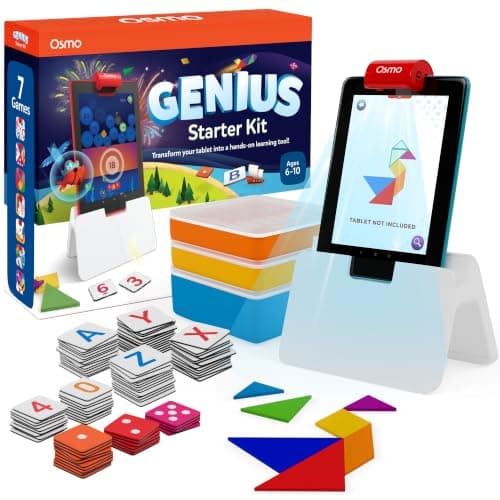 Ages 6 to 10 Osmo Genius Starter Kit for iPad Five games including Numbers, with 40 physical number tiles in front of the screen. | Six to ten, in a house with an iPad | |
| 4 | 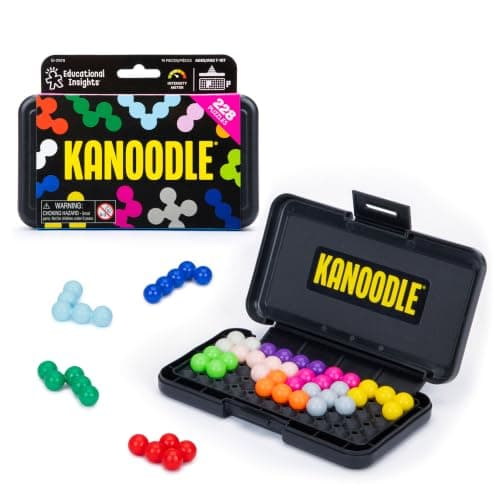 Ages 7 to adult Kanoodle 200+ published puzzles across flat 2D layouts and 3D pyramids, for one player. | Seven and up, for the geometry half of math | |
| 5 | 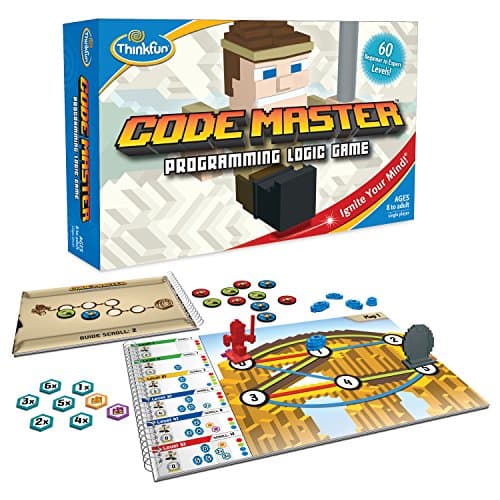 Ages 8 and up ThinkFun Code Master 60 graded levels of sequencing, loops and conditionals, on paper. | Eight and nine, for the algebra side | |
| — | 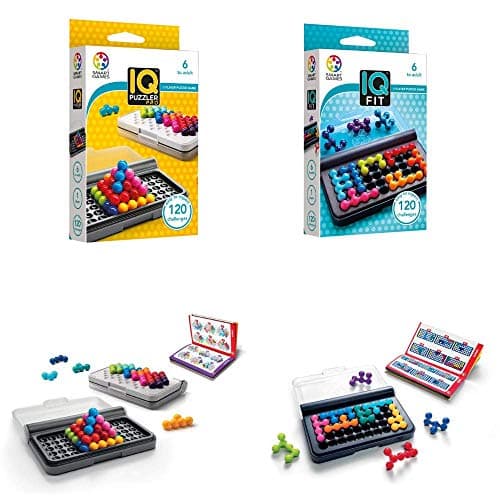 One year away at five SmartGames IQ Puzzler Pro 120 challenges in 2D and 3D — the most-bought-too-early game in this hub. | Six to adult |
6 picks, including 1 we tell you to skip. Ages shown are the manufacturer’s own rating, not ours.
The math shelf by published age
The arithmetic
Math and logic toys, and the age the maker publishes
| Gears! Gears! Gears! Deluxe | 3+ — 100 pieces, 46 gears, hand-cranked |
|---|---|
| Mental Blox | Ages 5+ — 20 blocks, 4 shapes across 3 attributes |
| MathLink Cubes | Ages 5 and up — 100 cubes, link on all sides |
| Rush Hour Junior | Ages 5+ — 40 challenges, self-checking |
| IQ Puzzler Pro | Ages 6 to adult — 120 challenges, 2D and 3D |
| Osmo Genius Starter Kit | Ages 6-10 — 5 games, 40 Numbers tiles |
| Kanoodle | Ages 7 and up — 200+ puzzles, 2D and 3D |
| Code Master | Ages 8 and up — 60 levels, loops and conditionals |
| Gravity Maze | Ages 8+ — 60 challenges, 3D structures, 3 marbles |
What each age can actually do
Three and four: count real things and compare them. One-to-one correspondence, more and fewer, and the beginning of pattern. Gears publishes 3+ and 46 gears, which is a counting set with a result attached.
Five: group, sort and build an array. This is the age linking cubes earn their place. A hundred cubes in ten colors is a sorting task before it is an arithmetic one, and the shape cut-outs give pattern work a reason.
Six and seven: hold a rule while applying it. Place value, simple multiplication as repeated addition, and spatial rotation. Kanoodle’s published 7+ is exactly where working backwards from a gap becomes reliable.
Eight and nine: generalise. A loop, a conditional, a formula. Code Master’s published ladder is this, and it is the first time a child can hold a rule that stands for many cases rather than one.
The buy-once option
If this is one purchase rather than a sequence, the published specification to look for is the absence of a ceiling. MathLink Cubes publishes 5 and up with no cards and no completion state, which means the same box answers counting at five and volume at nine — the only limit is whether an adult sets the task.
That trade is worth stating plainly, because it is the opposite of the usual advice. The cheapest and widest math toy here is also the one most dependent on a grown-up being interested. A household with no time for that is better served by Osmo Genius, which marks its own work, or Kanoodle, whose 200+ printed puzzles supply the task so nobody has to invent one.
What a math toy cannot do
None of these teaches times tables, and anything claiming to is selling a worksheet with a plastic frame. What they do is build the physical intuition the written work later rests on: an array before multiplication, a rotation before geometry, a loop before algebra.
That is a real contribution and it is worth buying for. It is not a substitute for the school work, and the shelf is clearer once you stop asking it to be. See do STEM toys work.
Worth knowing before you buy
So which one
Three or four: Gears! Gears! Gears! Deluxe.
Five, and there is an adult who will play: MathLink Cubes.
Six to ten, and nobody has time to check the work: Osmo Genius Starter Kit.
Seven, one present, make it last: Kanoodle.
Eight or nine: Code Master, or Gravity Maze if they prefer to build than to plan.
Say the unwelcome thing
Do not buy a math toy for the skill you want them to have
The published ages here are close together and the temptation is to buy a year ahead because the box lists the skill you are worried about. It does not work in this category: a child who cannot yet work backwards from a gap does not learn to by being handed a harder puzzle, they learn that puzzles are not for them. Buy at the published age and let the harder game be the next birthday.
Where to go next
Math toys by skill sorts the same shelf by what a child is stuck on rather than how old they are, math games for kids is the roundup, and pattern and sequencing toys covers the skill underneath all of it.
In full
Every pick, and what is wrong with it
Published specifications only, each linked back to the page it came from. Where a manufacturer publishes nothing, the row says so — we do not fill blanks in.
1. Ages 3 to 5
Gears! Gears! Gears! 100-Piece Deluxe Building Set
Learning Resources · LER9162 · maker rates it 3+
100 pieces including 46 gears, hand-cranked, with no batteries at all.
- Pieces
- 100
- Contents
- 46 gears, 26 square pillars, 21 six-way axles, 6 interlocking bases, 1 crank handle, activity guide
- Stated age
- 3+
- Batteries
- None — hand-cranked
Learning Resources publishes 100 pieces — 46 gears, 26 square pillars, 21 six-way axles, 6 interlocking bases, 1 crank handle and an activity guide — hand-cranked with no batteries and no consumables, rated 3+.
Forty-six gears is a counting set that moves. At three and four the math worth handling is one-to-one correspondence and simple comparison: how many, more than, fewer than — and a child who builds a chain of gears is doing exactly that with a result they can turn.
Hand-cranked matters here too: the speed of the last gear depends on the chain, which is a ratio a five-year-old can feel long before they can write one. See the Gears review.
Replay signal
- Open-ended or one-shot
- Open-ended, with immediate cause and effect: turn the handle, the whole thing moves
- Does anything run out
- Nothing runs out
- Room to grow
- Sets from the same line interlock, so a second box doubles the machine
Why we say so: Learning Resources publishes the full 100-piece contents list, the ages 3+ rating and the hand crank. No batteries appear in the published contents, which is why this one still works when everything else in the toy box is flat.
What’s wrong with it
Not sold as a math toy, so the math has to be noticed rather than taught.
| Pieces | 100 |
|---|---|
| Contents | 46 gears, 26 square pillars, 21 six-way axles, 6 interlocking bases, 1 crank handle, activity guide |
| Stated age | 3+ |
| Batteries | None — hand-cranked |
| Consumables | None |
Every figure above is from Learning Resources, Gears! Gears! Gears! Deluxe Building Set. Blanks are shown as “not published” rather than filled in.
2. Ages 5 to 8
MathLink Cubes, Set of 100
Learning Resources · LER4285 · maker rates it 5+
100 cubes in 10 colors that link on all sides, with shape cut-outs for patterning.
- Cubes
- 100, in 10 colors
- Cube size
- 3/4 inch
- Connection
- Links on all sides, with geometric shape cut-outs for patterning
- Stated age
- Ages 5 and up
Learning Resources publishes 100 cubes in 10 colors at three-quarters of an inch each, linking on all sides with geometric shape cut-outs for patterning, with no batteries and no consumables, rated ages 5 and up.
Linking on all sides is the specification that makes this the widest math toy on the site. Cubes that join in one direction make a tower; cubes that join in six make arrays, so the same hundred pieces cover counting at five, place value and multiplication at seven, and volume and surface area at nine.
The absence of structure is the real trade, and it is a genuine one — nothing tells the child what to do, which means it is brilliant with a willing adult and inert without one. See the MathLink Cubes review.
Replay signal
- Open-ended or one-shot
- Completely open-ended, and unusually cheap for something that is
- Does anything run out
- Nothing runs out
- Room to grow
- The same cubes cover counting at five and volume, arrays and fractions at nine
Why we say so: Learning Resources publishes that the cubes link on all sides with geometric cut-outs. All-sides connection is what turns a counting toy into a building toy — a cube that only joins end to end makes towers, and one that joins on six faces makes arrays, volumes and models.
What’s wrong with it
No cards, no game, no structure. An adult has to set the tasks.
| Cubes | 100, in 10 colors |
|---|---|
| Cube size | 3/4 inch |
| Connection | Links on all sides, with geometric shape cut-outs for patterning |
| Stated age | Ages 5 and up |
| Batteries | None |
| Consumables | None |
Every figure above is from Learning Resources, MathLink Cubes, Set of 100. Blanks are shown as “not published” rather than filled in.
3. Ages 6 to 10
Osmo Genius Starter Kit for iPad
Osmo · Genius Starter Kit · maker rates it 6-10
Five games including Numbers, with 40 physical number tiles in front of the screen.
- Games
- Five — Tangram, Numbers, Words, Newton and Masterpiece
- Contents
- Osmo Base and reflector, 52 Words tiles, 40 Numbers tiles, 7 Tangram pieces, stackable storage
- Screen required
- Yes — an iPad, not included
- Stated age
- Ages 6-10
Osmo publishes five games — Tangram, Numbers, Words, Newton and Masterpiece — with the Osmo Base and reflector, 52 Words tiles, 40 Numbers tiles, 7 Tangram pieces and stackable storage, rated ages 6-10, with an iPad required and not included.
The published reason this belongs on a math page rather than only a screen one is the 40 Numbers tiles: the child arranges physical tiles on the table and the camera reads them, so the arithmetic happens with hands and the screen supplies the feedback.
It is the one product here that marks its own work, which is why it suits a household where nobody has twenty minutes to sit and check. See the Genius Starter Kit review.
Replay signal
- Open-ended or one-shot
- Five separate games rather than one, so it degrades gracefully — when one is exhausted, four remain
- Does anything run out
- Nothing physical runs out
- Room to grow
- Numbers and Tangram both scale well past the stated top age; Words does not
- Adult required
- Only to release the iPad, which in most households is the actual constraint
Why we say so: Osmo publishes the five named games and the exact tile counts. Five games in one box is the honest reason this is better value than a single-game Osmo kit, and the iPad requirement is a published dependency rather than an inference.
What’s wrong with it
An iPad is required and not included, and it has to be free when they want it.
| Games | Five — Tangram, Numbers, Words, Newton and Masterpiece |
|---|---|
| Contents | Osmo Base and reflector, 52 Words tiles, 40 Numbers tiles, 7 Tangram pieces, stackable storage |
| Screen required | Yes — an iPad, not included |
| Stated age | Ages 6-10 |
| Batteries | None in the physical pieces |
Every figure above is from Osmo, Genius Starter Kit. Blanks are shown as “not published” rather than filled in.
4. Ages 7 to adult
Kanoodle
Educational Insights · Kanoodle · maker rates it 7+
200+ published puzzles across flat 2D layouts and 3D pyramids, for one player.
- Puzzles
- 200+
- Formats
- Two — flat 2D puzzles and 3D pyramids
- Pieces
- Connected-bead puzzle pieces
- Players
- 1
Educational Insights publishes 200+ puzzles across two formats — flat 2D puzzles and 3D pyramids — with connected-bead puzzle pieces, one player and no batteries, rated ages 7 and up.
Spatial reasoning is the part of mathematics that gift lists forget, and it is the part that predicts later geometry. Fitting irregular bead pieces into a fixed frame is the same operation as rotating a shape in a head, done with hands.
Two hundred puzzles is also simply the best value per challenge in this hub. See the Kanoodle review and spatial reasoning toys.
Replay signal
- Open-ended or one-shot
- Finite, but 200+ published puzzles is the largest count on this site
- Does anything run out
- Nothing runs out; the booklet is long enough to feel endless
- Room to grow
- 2D first, then the 3D pyramid set, which is a genuine step in difficulty
Why we say so: Educational Insights publishes 200-plus puzzles across 2D and 3D formats from one small case. Two hundred is roughly three times what a typical single-player logic game ships with, which is why this one survives a long car journey and a wet week.
What’s wrong with it
Spatial rather than numerical. It will not help with times tables.
| Puzzles | 200+ |
|---|---|
| Formats | Two — flat 2D puzzles and 3D pyramids |
| Pieces | Connected-bead puzzle pieces |
| Players | 1 |
| Batteries | None |
| Stated age | Ages 7 and up |
Every figure above is from Educational Insights, Kanoodle. Blanks are shown as “not published” rather than filled in.
5. Ages 8 and up
ThinkFun Code Master
ThinkFun · 1950 · maker rates it 8+
60 graded levels of sequencing, loops and conditionals, on paper.
- Levels
- 60, beginner to expert
- Players
- 1
- Format
- Map-based programming logic — sequence the avatar's moves to collect power crystals
- Batteries
- None
ThinkFun publishes 60 levels from beginner to expert, a single player, map-based programming logic in which the player sequences an avatar’s moves to collect power crystals, and no batteries, rated ages 8 and up.
A loop is a mathematical object before it is a programming one, and this is the cheapest place a child meets one. The published progression — sequence, then repeat, then branch — is the same ladder that leads to functions and variables.
Eight is a real floor rather than a cautious one here, so this is the purchase that follows MathLink Cubes rather than replacing them. See the Code Master review.
Replay signal
- Open-ended or one-shot
- Finite — 60 levels, and they are worked through in order
- Does anything run out
- Nothing runs out, but the level book does end
- Room to grow
- The later levels introduce conditionals and loops, so the concept ladder is real rather than cosmetic
Why we say so: ThinkFun publishes 60 levels from beginner to expert and a map-and-sequence format. The concepts the later levels introduce — branching and repetition — are the same two ideas that make a real program, which is why this works as preparation for a screen rather than as a substitute for one.
What’s wrong with it
Finite, single player, and over after 60 levels.
| Levels | 60, beginner to expert |
|---|---|
| Players | 1 |
| Format | Map-based programming logic — sequence the avatar's moves to collect power crystals |
| Batteries | None |
| Stated age | Ages 8 and up |
Every figure above is from ThinkFun, Code Master. Blanks are shown as “not published” rather than filled in.
Skip this one
SmartGames IQ Puzzler Pro
SmartGames · SG455 · maker rates it 6+
120 challenges in 2D and 3D — the most-bought-too-early game in this hub.
- Challenges
- 120, across 2D and 3D modes
- Contents
- Compact board with a transparent lid, 12 puzzle pieces, challenge booklet with solutions
- Players
- 1
- Batteries
- None
SmartGames publishes 120 challenges across 2D and 3D modes, a compact board with a transparent lid, 12 puzzle pieces and a challenge booklet with solutions, for one player, with no batteries, rated ages 6 to adult.
A very good game and the most common age mistake in this category, which is why it appears here as the one to hold back. Its published floor is six, and the first page of challenges assumes a child can work backwards from an empty space.
Buy it on the sixth birthday, not the fifth. See what is actually published for five-year-olds.
Replay signal
- Open-ended or one-shot
- Finite, but 120 challenges is roughly double what most single-player puzzle games ship with
- Does anything run out
- The booklet ends. The pieces do not
- Room to grow
- The same 12 pieces run 2D and 3D challenge sets, so the difficulty ceiling is well above the entry point
Why we say so: SmartGames publishes 120 challenges across two modes from a single 12-piece set. Twelve pieces generating 120 published problems is the best challenge-per-component ratio of any logic game on this site, and it is the reason this one travels well and lasts.
What’s wrong with it
Published 6 to adult. Bought at four or five it teaches that puzzles are not for them.
| Challenges | 120, across 2D and 3D modes |
|---|---|
| Contents | Compact board with a transparent lid, 12 puzzle pieces, challenge booklet with solutions |
| Players | 1 |
| Batteries | None |
| Stated age | Ages 6 to adult |
| Travel case | Yes — the board is the case |
Every figure above is from SmartGames, IQ Puzzler Pro. Blanks are shown as “not published” rather than filled in.
We are not putting a buy button on this one. It is easy enough to find if you want it anyway — but we would rather send you to something that gets played with twice.
Questions people actually ask
Frequently asked
What math toy is right for a 5 year old?
MathLink Cubes. Learning Resources publishes 100 cubes in 10 colors at three-quarters of an inch, linking on all sides with geometric shape cut-outs, rated 5 and up - which covers sorting and counting now and arrays and volume years later. MathLink Cubes review.
What math toys work for a 3 year old?
Gears! Gears! Gears! Deluxe, published at 3+ with 100 pieces including 46 gears, hand-cranked and battery-free. At three the math worth handling is counting, comparison and pattern, and a gear chain gives all three a visible result.
What math toy should I buy for a 7 or 8 year old?
Kanoodle at seven, published 7 and up with 200+ spatial puzzles, and Code Master at eight, published 8 and up with 60 levels of sequencing, loops and conditionals. The first builds geometry intuition, the second builds the algebra side. Logic games for 7 and 8 year olds.
Is there one math toy that covers several ages?
MathLink Cubes, because it publishes no cards and no completion state - the same 100 cubes serve counting at five and volume at nine. The trade is that nothing tells the child what to do, so it depends on an adult setting tasks.
Which math toy marks its own work?
The Osmo Genius Starter Kit, published for ages 6-10. The camera reads 40 physical Numbers tiles laid on the table, so the arithmetic is done by hand and the feedback comes from the app. It requires an iPad that is not included. Osmo Genius Starter Kit review.
Can a 5 year old use IQ Puzzler Pro?
Below the published rating - SmartGames publishes 6 to adult. Its 120 challenges are better value than most games available at five, but a year later. At five, Rush Hour Junior publishes 40 self-checking challenges at 5+. Logic games for 5 year olds.
Do math toys teach times tables?
No, and none of these claims to. What they build is the physical intuition the written work rests on - an array before multiplication, a rotation before geometry, a loop before algebra. They sit alongside school work rather than replacing it. Do STEM toys work?.
Sources
Where these figures came from
Every specification on this page traces to one of these. If a manufacturer publishes nothing on a point, the page says so rather than filling the gap.
Read next
Where to go from here
Back to Math & Logic, or read how we pick.