The picks
Best Glow-in-the-Dark Science Kits
It is dark at five o'clock. A glow kit is the one science category where that is an advantage - but half of them glow once and half of them glow every night for years, and the box rarely says which.
By Sawyer V. · Published
The short answer
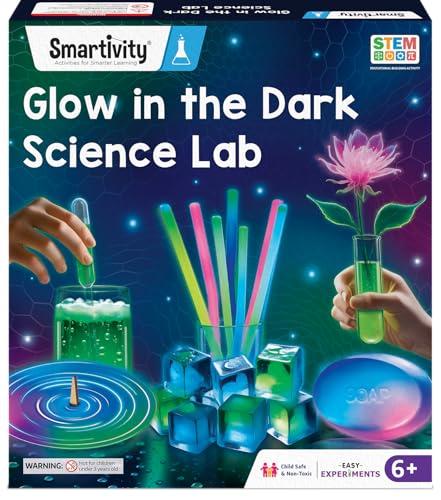
Smartivity Glow Magic is the pick: twenty-plus published experiments, three named glow mechanisms and a UV torch that still works after the powders are gone. For a single present under $20, the National Geographic jumbo glow crystal kit ends with an object on a shelf, and the Glow-in-the-Dark Mega kit includes a real fluorescent mineral rather than only chemistry.
Block & Beaker earns a commission when you buy through our links, at no cost to you. It never changes a ranking, and we say so plainly when the right answer is the cheaper set, or nothing at all. Full disclosure · How we pick.
At a glance
The picks, ranked
Tap any row to jump to the full reasoning. Prices come live from Amazon where we have them and read “check price” where we don’t — never a number we cannot stand behind today.
| # | Product | Best for | Price |
|---|---|---|---|
| 1 | Best overall — the only one with a UV torch in it Smartivity Glow Magic Science Kit 20+ experiments, three named glow mechanisms, and equipment that outlives the consumables. | Six to twelve, for a child who will want to do this more than once | |
| 2 | 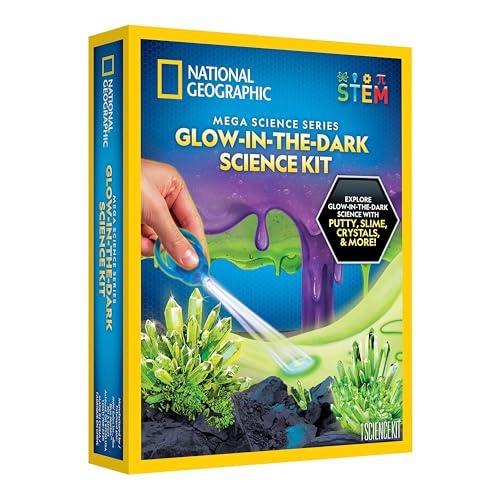 Best mix of chemistry and a real specimen NATIONAL GEOGRAPHIC Glow-in-the-Dark Mega Science Experiment Kit Crystal growing, slime, glowing putty and a wernerite specimen, with a guide explaining why each glows. | Eight and up, where something should still exist when the slime is gone | |
| 3 | 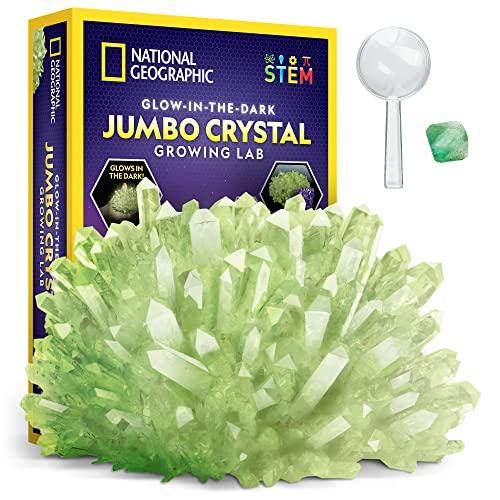 Best result to keep — a glowing crystal NATIONAL GEOGRAPHIC Jumbo Glow-in-the-Dark Crystal Growing Kit A crystal three times the size of the standard kits, which glows, plus a fluorite specimen. | Eight and up, for a child who will accept a few days of waiting | |
| 4 | 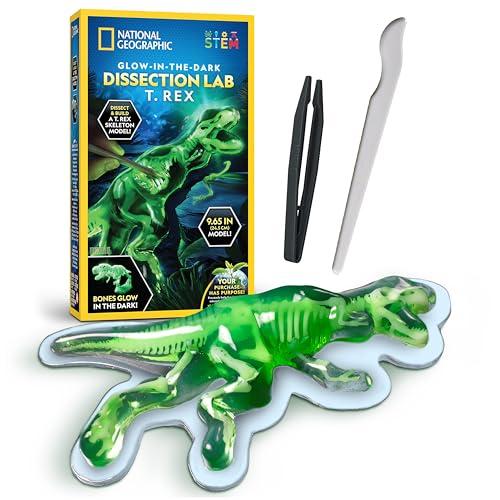 Best for a dinosaur household NATIONAL GEOGRAPHIC Glow-in-the-Dark T. Rex Dissection Lab Kit A glow-in-the-dark dissection model that teaches anatomy rather than only excavation. | Six and up, where the subject has to be a dinosaur before it is science | |
| 5 | 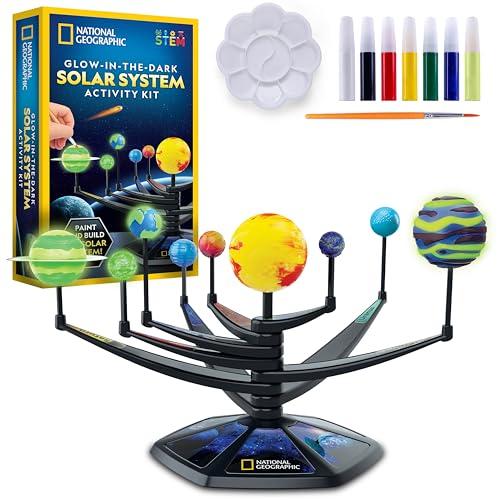 Best glow that stays on the ceiling NATIONAL GEOGRAPHIC Glow-in-the-Dark Solar System Model A glow-in-the-dark solar system model: built once, then it is the room. | Six and up, where the result should be permanent room decoration | |
| 6 | 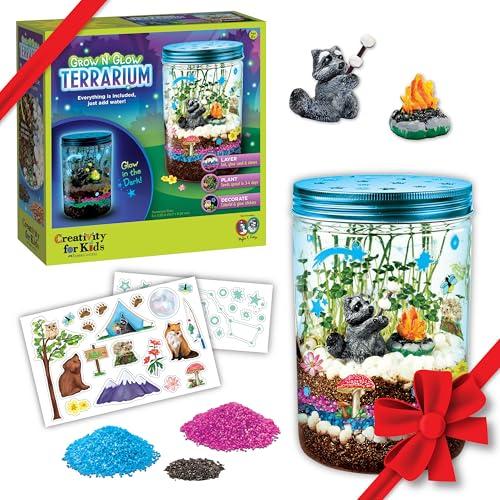 Cheapest, and the only living one Creativity for Kids Grow 'N Glow Terrarium Kit Seed for two plantings, growth in three to four days, and glow figurines that stay in the jar. | Six and up, for a child who likes looking after things | |
| — | 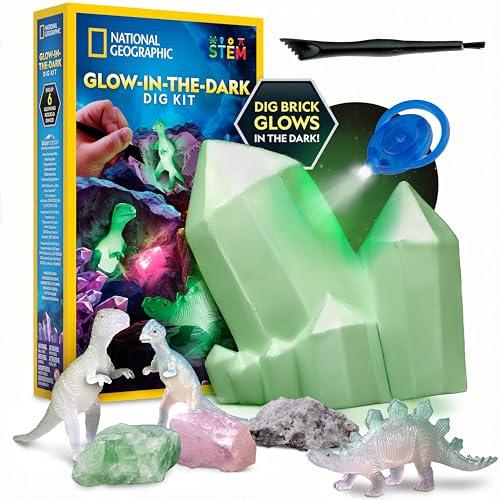 The one to skip on an evening-filling test NATIONAL GEOGRAPHIC Glow-in-the-Dark Rock and Dinosaur Dig Kit One dig brick, six glowing finds and an LED light - and the brick is destroyed by using it. | A single rainy afternoon, which is exactly what it says it is |
7 picks, including 1 we tell you to skip. Ages shown are the manufacturer’s own rating, not ours.
Three different things are being sold as “glow”
The arithmetic
How each kit actually produces light
| Phosphorescence | Stores light, releases it slowly. Recharges forever. Putty, stickers, models |
|---|---|
| Fluorescence | Glows only while a UV light is on it. Needs a torch. Minerals, dyes |
| Chemiluminescence | A chemical reaction making light. Single use. Glow sticks |
| Smartivity Glow Magic | All three, named, with a UV torch included |
| NatGeo Glow Mega kit | Phosphorescent putty, fluorescent wernerite, one-shot chemistry |
| Glow crystal / solar system / terrarium | Phosphorescent. Recharge from room light |
Why a glow kit is a November purchase specifically
The activity requires darkness, and darkness is finally available at bedtime. A glow kit bought in June is a kit that gets tested in a wardrobe. Bought now, the room is dark at the hour a child is still awake.
It competes directly with a screen at the right time of day. The five-to-seven window on a winter evening is when most households lose the argument. A thing that only works with the lights off wins it occasionally.
And it keeps working in January. Phosphorescent output recharges from ordinary room light indefinitely, so nothing here expires on a date — which is more than can be said for most December science purchases.
What to check before you buy one
Is there a UV source in the box? If a kit publishes fluorescent powders or minerals and no torch, those parts of it do nothing until someone buys a UV light separately.
How much of the box is consumed? A kit of glow sticks is gone in an evening. A kit with putty, a model or a specimen is not.
Is a safety standard named? Smartivity publishes ASTM F963-23 and CPSIA by name. That is the level of disclosure to expect from a kit of powders and dyes aimed at six-year-olds, and plenty of this category does not reach it.
Worth knowing before you buy
Say the unwelcome thing
Do not buy a glow kit that is mostly glow sticks
Glow sticks are chemiluminescent: a sealed reaction that happens once and is finished. A kit built around a handful of them is a party bag with a learning guide stapled to it. The kits worth buying publish a phosphorescent material that recharges, a UV source, or a specimen — something that still glows on the second night.
Where to go next
Best science kits under $25 is the same shelf sorted by price, star projectors for kids is the other after-dark category, and crystal growing kits covers the grow-it-yourself side without the glow.
In full
Every pick, and what is wrong with it
Published specifications only, each linked back to the page it came from. Where a manufacturer publishes nothing, the row says so — we do not fill blanks in.
1. Best overall — the only one with a UV torch in it
Smartivity Glow Magic Science Kit
Smartivity · SMRT 1214 · maker rates it 6-12
20+ experiments, three named glow mechanisms, and equipment that outlives the consumables.
- Experiments
- “20+ GLOW-IN-THE-DARK EXPERIMENTS … a dark lava lamp, glow soap, a glow stick, a glowing spinner, a magic sheet and secret messages”
- Science taught
- “Discover chemiluminescence, phosphorescence and fluorescence and find out what makes different things glow”
- Equipment
- “UV torch with stand, red, green and blue LEDs, beaker, cup, test tube, pipette, glow powders, fluorescent dye, 3 glow sticks and a messy mat”
- Safety standards
- “tested to ASTM F963-23 and CPSIA” — both named
Smartivity publishes “20+ GLOW-IN-THE-DARK EXPERIMENTS” including a lava lamp, glow soap, a glow stick, a spinner and secret messages; the science as “chemiluminescence, phosphorescence and fluorescence”; equipment as a “UV torch with stand, red, green and blue LEDs, beaker, cup, test tube, pipette, glow powders, fluorescent dye, 3 glow sticks and a messy mat”; testing to “ASTM F963-23 and CPSIA”; and free lifetime replacement parts.
Three named mechanisms is the reason this leads. Most glow kits do one thing and call it magic. This one separates the chemical reaction in a glow stick from the stored light in a phosphorescent powder from the fluorescence you only see under UV — which is an actual physics lesson a ten-year-old can hold.
The torch is the retention argument. When the powders are finished, a UV light still finds things that glow all over the house: a banknote, a highlighter, washing powder, tonic water. See science experiment kits for the wider shelf.
Replay signal
- Open-ended or one-shot
- Twenty-plus published experiments, and the UV torch and LEDs stay useful after the powders are gone
- Does anything run out
- Glow powder, fluorescent dye and the glow sticks
- Room to grow
- A published free-for-life replacement-parts policy, which is rare in this category
- Adult required
- Published as not required: “one step per page, big pictures and instructional videos … so they do each one themselves”
Why we say so: Smartivity publishes twenty-plus experiments, three named glow mechanisms, a UV torch with LEDs, ASTM F963-23 and CPSIA by name, and free lifetime replacement parts. The torch is why this outlives its consumables: once the powders are used, a UV light still finds things that glow around the house.
What’s wrong with it
The glow powders and dye do run out, and this is the most expensive pick here.
| Experiments | “20+ GLOW-IN-THE-DARK EXPERIMENTS … a dark lava lamp, glow soap, a glow stick, a glowing spinner, a magic sheet and secret messages” |
|---|---|
| Science taught | “Discover chemiluminescence, phosphorescence and fluorescence and find out what makes different things glow” |
| Equipment | “UV torch with stand, red, green and blue LEDs, beaker, cup, test tube, pipette, glow powders, fluorescent dye, 3 glow sticks and a messy mat” |
| Safety standards | “tested to ASTM F963-23 and CPSIA” — both named |
| Replacement parts | “If any piece goes missing or breaks, it is replaced free for life” |
| Stated age | “Kids 6-12” |
| Consumables | The glow powders, dye and three glow sticks |
Every figure above is from Smartivity, Glow Magic Science Kit (SMRT 1214) — published listing copy. Blanks are shown as “not published” rather than filled in.
2. Best mix of chemistry and a real specimen
NATIONAL GEOGRAPHIC Glow-in-the-Dark Mega Science Experiment Kit
National Geographic · NGMEGAGID · maker rates it Not published
Crystal growing, slime, glowing putty and a wernerite specimen, with a guide explaining why each glows.
- Activities
- Four, named in the listing: “crystal, DIY slime, wernerite, and putty” — crystal growing, slime making, glowing putty and a mineral specimen
- Specimen
- Wernerite, a mineral that fluoresces — the one part of the kit that is not made in the box
- Learning guide
- “Our full-color learning guide teaches why the crystal, DIY slime, wernerite, and putty in your kit glow”
- Stated age
- Not published on the listing
National Geographic publishes four named activities — “crystal, DIY slime, wernerite, and putty” — and a full-color learning guide that teaches why each of them glows.
Wernerite is the detail worth paying for. It is a real mineral that fluoresces, it was not made in the box, and it is the part of this kit still in the house at Easter. Slime goes in the bin; a rock that lights up under a lamp does not.
The guide matters too, because “why does this glow” is the question a child asks within about ten seconds, and most kits have no answer printed anywhere. Our rock and geology kits page covers the specimen side.
Replay signal
- Open-ended or one-shot
- Mixed — the chemistry is one-shot, the specimen and the putty are keepers
- Does anything run out
- The crystal powder and slime chemistry run out after one run each
- Room to grow
- None published; this is a box of four activities
- Adult required
- Not published as required
Why we say so: National Geographic publishes four named activities and, unusually for a glow kit, a real fluorescent mineral — wernerite — alongside the chemistry. The specimen is the part still in the house at Easter: slime goes in the bin, and a rock that glows under a light does not.
What’s wrong with it
Two of the four activities are single-use, and no age rating is published.
| Activities | Four, named in the listing: “crystal, DIY slime, wernerite, and putty” — crystal growing, slime making, glowing putty and a mineral specimen |
|---|---|
| Specimen | Wernerite, a mineral that fluoresces — the one part of the kit that is not made in the box |
| Learning guide | “Our full-color learning guide teaches why the crystal, DIY slime, wernerite, and putty in your kit glow” |
| Stated age | Not published on the listing |
| Consumables | The crystal and slime chemistry are single-use; the wernerite specimen and the putty are not |
Every figure above is from National Geographic / Blue Marble, Glow-in-the-Dark Mega Science Experiment Kit (NGMEGAGID) — published listing copy. Blanks are shown as “not published” rather than filled in.
3. Best result to keep — a glowing crystal
NATIONAL GEOGRAPHIC Jumbo Glow-in-the-Dark Crystal Growing Kit
National Geographic · NGJUMCRYSTAL2 · maker rates it Not published
A crystal three times the size of the standard kits, which glows, plus a fluorite specimen.
- Crystal size
- “up to 3x larger than those in our other crystal growing labs”
- Time to grow
- “Grow an awesome crystal in just a few days”
- Specimen included
- “a fascinating fluorite specimen”
- Glow
- The grown crystal itself glows: “Growing a crystal that glows in the dark!”
National Geographic publishes a crystal “up to 3x larger than those in our other crystal growing labs”, grown “in just a few days”, that glows in the dark, plus a fluorite specimen in the box.
A one-shot kit earns its place when the output is permanent, and this is the clearest case on the page: at the end of the week there is a large glowing crystal on a windowsill that the child made. That object is doing work for years.
Manage the wait if this is a Christmas-morning present. Nothing happens on the day; something happens by the weekend. Compare with crystal growing kits generally.
Replay signal
- Open-ended or one-shot
- Closed — one crystal, grown once
- Does anything run out
- The growing solution runs out after one crystal
- Room to grow
- The finished crystal and the fluorite stay on a shelf, which is the point
- Adult required
- Not published as required; the process is mix, pour and wait
Why we say so: National Geographic publishes a crystal three times the size of their standard kits, a few days to grow, and a fluorite specimen in the box. A single-use kit that ends with an object on a windowsill is the version of a one-shot experiment worth buying — the result is the keepsake, not the afternoon.
What’s wrong with it
Single-use chemistry, and nothing visible happens for several days.
| Crystal size | “up to 3x larger than those in our other crystal growing labs” |
|---|---|
| Time to grow | “Grow an awesome crystal in just a few days” |
| Specimen included | “a fascinating fluorite specimen” |
| Glow | The grown crystal itself glows: “Growing a crystal that glows in the dark!” |
| Guide | “learn all about crystal science in our detailed learning guide” |
| Stated age | Not published |
| Consumables | The crystal chemistry is single-use; the fluorite specimen is permanent |
Every figure above is from National Geographic / Blue Marble, Jumbo Glow-in-the-Dark Crystal Growing Kit (NGJUMCRYSTAL2) — published listing copy. Blanks are shown as “not published” rather than filled in.
4. Best for a dinosaur household
NATIONAL GEOGRAPHIC Glow-in-the-Dark T. Rex Dissection Lab Kit
National Geographic · RTNGTREXLAB · maker rates it Not published
A glow-in-the-dark dissection model that teaches anatomy rather than only excavation.
- Activity
- “dig into a realistic Tyrannosaurus rex dino mold and extract glow-in-the-dark bones hidden inside”
- Finished model
- A glow-in-the-dark skeleton, “nearly 10" long”
- Repeat use
- “a second gel refill pack so kids can reset the mold and dissect again”
- Included
- “a dino mold, glow-in-the-dark skeleton, gel refill, dissection tool, tweezers, instructions, and a Learning Guide”
National Geographic publishes the Glow-in-the-Dark T. Rex Dissection Lab Kit as an anatomy model. Its published figures are on dinosaur skeleton model kits, and anatomy and biology kits covers the wider category.
Dissection is a different activity from digging, and the better one for retention: a dig brick is destroyed, a model comes apart and goes back together. Adding a glow layer means the reassembled model is also the night light.
For a child already deep into dinosaurs this converts an interest they have into anatomy they do not, which is the most reliable way to get a second use out of a science kit. See gifts for kids who love dinosaurs.
Replay signal
- Open-ended or one-shot
- Fixed activity — one dissection, then one skeleton
- Does anything run out
- Yes: the gel. The published refill makes it two uses rather than one
- Room to grow
- The skeleton is the keepable half and it glows, so it stays visible after the gel is gone
Why we say so: Blue Marble publishes a second gel refill pack in the box. That one published inclusion is the difference between a one-afternoon kit and a two-afternoon kit, and it is the only dissection-style kit here whose maker publishes a refill at all.
What’s wrong with it
A model rather than a specimen, and the anatomy is simplified.
| Activity | “dig into a realistic Tyrannosaurus rex dino mold and extract glow-in-the-dark bones hidden inside” |
|---|---|
| Finished model | A glow-in-the-dark skeleton, “nearly 10" long” |
| Repeat use | “a second gel refill pack so kids can reset the mold and dissect again” |
| Included | “a dino mold, glow-in-the-dark skeleton, gel refill, dissection tool, tweezers, instructions, and a Learning Guide” |
| Stated age | Not published by Blue Marble |
| Availability | “AMAZON EXCLUSIVE — Blue Marble has developed this product exclusively for Amazon” |
| Year released | 2025 |
| Consumables | The gel. Two goes, counting the refill |
Every figure above is from National Geographic toys (Blue Marble) — brand site; per-product figures from the manufacturer's published listing copy. Blanks are shown as “not published” rather than filled in.
5. Best glow that stays on the ceiling
NATIONAL GEOGRAPHIC Glow-in-the-Dark Solar System Model
National Geographic · NGSOLARSYS · maker rates it 8-12
A glow-in-the-dark solar system model: built once, then it is the room.
- Bodies modeled
- “all 8 planets and the sun”
- Included
- “6 vibrant paint colors, glow-in-the-dark accent paint, brush, palette, fun decals, and a poster with solar system facts”
- Adjustability
- “movable arms allow kids to set up and rearrange their solar system display”
- Stated age
- “Ages 8-12”
National Geographic publishes the Glow-in-the-Dark Solar System Model as a build-and- display kit. The published contents are covered on gifts for kids who love space.
It is the most honest value on the page in one specific sense: it costs about the same as a one-afternoon dig kit and the result stays up permanently, recharging from the room light every day for years.
Do not buy it expecting experiments. It is a model, the assembly is the activity, and the glow is the point of owning it afterwards. Our star projectors page is the powered version of the same idea.
Replay signal
- Open-ended or one-shot
- One finished model — the open part is the painting, and it happens once
- Does anything run out
- The six paints and the glow paint are used up on the build
- Room to grow
- The movable arms are the only thing that changes after assembly; the published use after that is room decor
Why we say so: Blue Marble publishes eight planets plus the sun, six paints and a glow-in-the-dark accent paint. That is a kit with a finished state, which is why it sits on a gift list rather than a list of things that get replayed: what lasts is the object on the shelf, not the activity.
What’s wrong with it
Assembly is the whole activity - there is no experiment to repeat.
| Bodies modeled | “all 8 planets and the sun” |
|---|---|
| Included | “6 vibrant paint colors, glow-in-the-dark accent paint, brush, palette, fun decals, and a poster with solar system facts” |
| Adjustability | “movable arms allow kids to set up and rearrange their solar system display” |
| Stated age | “Ages 8-12” |
| Product dimensions | 12.0 x 7.1 x 2.4 in boxed; 0.65 lb |
| Year released | 2024 |
| Consumables | The paints. The model itself is permanent |
Every figure above is from National Geographic toys (Blue Marble) — brand site; per-product figures from the manufacturer's published listing copy. Blanks are shown as “not published” rather than filled in.
6. Cheapest, and the only living one
Creativity for Kids Grow 'N Glow Terrarium Kit
Creativity for Kids · 1137000 · maker rates it 6+
Seed for two plantings, growth in three to four days, and glow figurines that stay in the jar.
- Contents
- “a plastic terrarium jar, potting mix (vermiculite), plenty of quick-growing chia and wheatgrass seeds, glow-in-the-dark forest figurines, and more”
- Plantings
- “everything a young botanist needs to plant and grow their terrarium twice”
- Time to grow
- “will begin to grow in as little as 3-4 days”
- Glow
- “colorful sand, star and constellation stickers that glow in the dark”, plus glowing figurines
Creativity for Kids publishes a terrarium jar, vermiculite, chia and wheatgrass seed “to plant and grow their terrarium twice”, glow-in-the-dark forest figurines and constellation stickers, with growth beginning “in as little as 3-4 days”.
Three to four days is the useful published figure. A six-year-old who can check something every morning and see a change has a reason to come back, and that is a different retention mechanism from any kit on this page.
Be clear what glows: the figurines and the stickers, not the plants. The science here is germination, and the glow is the reason the jar sits by the bed rather than on a shelf.
Replay signal
- Open-ended or one-shot
- Semi-open — the jar and figurines stay, and the maker publishes seed for a second planting
- Does anything run out
- Seeds and vermiculite, after two goes
- Room to grow
- Any seed fits the jar afterwards, which is not published but is how the object behaves
- Adult required
- Not published as required beyond watering
Why we say so: Creativity for Kids publishes enough seed for two plantings, growth in 3-4 days and glow figurines that stay in the jar. Three days is the figure that matters for a six-year-old: a living result they can check every morning is a different kind of science kit from one that is finished the afternoon it is opened.
What’s wrong with it
Biology rather than physics - the glow is the figurines and stickers, not the plants.
| Contents | “a plastic terrarium jar, potting mix (vermiculite), plenty of quick-growing chia and wheatgrass seeds, glow-in-the-dark forest figurines, and more” |
|---|---|
| Plantings | “everything a young botanist needs to plant and grow their terrarium twice” |
| Time to grow | “will begin to grow in as little as 3-4 days” |
| Glow | “colorful sand, star and constellation stickers that glow in the dark”, plus glowing figurines |
| Seed origin | “All seeds are from and packaged in the USA” |
| Stated age | “Ages 6+”, described as “ages 6-8+” |
| Consumables | Seeds and potting mix, published as enough for two plantings |
Every figure above is from Creativity for Kids (Faber-Castell), Grow 'N Glow Terrarium (1137000) — published listing copy. Blanks are shown as “not published” rather than filled in.
Skip this one
NATIONAL GEOGRAPHIC Glow-in-the-Dark Rock and Dinosaur Dig Kit
National Geographic · RTNGGIDDIG · maker rates it Not published
One dig brick, six glowing finds and an LED light - and the brick is destroyed by using it.
- Finds
- “3 genuine, glowing rock specimens and 3 glowing dinos from a glow-in-the-dark brick”
- Dig brick
- One, and it also glows — “Even the dig brick glows in the dark”
- Light
- “LED Light Included to Make Rocks Glow”
- Tools
- “the included dig tool”, with instructions and a learning guide
National Geographic publishes “3 genuine, glowing rock specimens and 3 glowing dinos from a glow-in-the-dark brick”, a dig tool, an LED light to make the rocks glow, and a learning guide with facts about each specimen.
Everything published about it is accurate and the rock specimens are real — this is not a bad product and the price is fair for what is in the box. It is the skip here purely on run time: one brick is one afternoon, and the LED plus six objects is what remains.
If a dig is what the child wants, buy it as a dig and not as a glow kit — dinosaur dig kits ranks the category properly.
Replay signal
- Open-ended or one-shot
- Closed — one brick, excavated once, and six objects afterwards
- Does anything run out
- The brick is the kit and it is gone in an afternoon
- Room to grow
- The six specimens and the LED join a rock collection; the kit itself does not come back
Why we say so: National Geographic publishes one dig brick, six finds and an LED light. Everything published about it is accurate and the finds are real — but one brick is one afternoon, and on a page about kits that keep a December evening going that is the shortest run time here.
What’s wrong with it
The kit is one afternoon, and this page is about kits that survive December.
| Finds | “3 genuine, glowing rock specimens and 3 glowing dinos from a glow-in-the-dark brick” |
|---|---|
| Dig brick | One, and it also glows — “Even the dig brick glows in the dark” |
| Light | “LED Light Included to Make Rocks Glow” |
| Tools | “the included dig tool”, with instructions and a learning guide |
| Stated age | Not published |
| Consumables | The dig brick, which is destroyed by the activity |
Every figure above is from National Geographic / Blue Marble, Glow-in-the-Dark Rock and Dinosaur Dig Kit (RTNGGIDDIG) — published listing copy. Blanks are shown as “not published” rather than filled in.
We are not putting a buy button on this one. It is easy enough to find if you want it anyway — but we would rather send you to something that gets played with twice.
Questions people actually ask
Frequently asked
What is the best glow-in-the-dark science kit?
Smartivity Glow Magic. It publishes twenty-plus experiments and names three separate glow mechanisms - chemiluminescence, phosphorescence and fluorescence - and it includes a UV torch, which is the one piece of equipment that keeps working after the powders are used up.
Why do some glow kits stop working?
Because they were chemiluminescent. A glow stick makes light by a chemical reaction that happens once. Phosphorescent materials - putty, stickers, models - store light and release it, so they recharge from room light indefinitely and never run out.
Do glow-in-the-dark science kits need a UV light?
The fluorescent parts do. A fluorescent mineral or dye only glows while ultraviolet light is falling on it, so a kit that publishes those and includes no torch leaves half the box inert. Check whether a UV source is listed in the contents before buying.
What age are glow science kits for?
The makers that publish an age say 6 and up, because the kits contain powders and dyes rather than because of the glow. Several listings in this category publish no age at all, which is worth noticing: the ones that also name ASTM F963 and CPSIA are the ones to prefer.
Are glow-in-the-dark toys safe for kids?
Modern phosphorescent toys use strontium aluminate, which is non-radioactive and is the standard material. The real cautions in a glow science kit are the UV torch - never look into one - and the powders and dyes, which are not food-safe and stain. Toy safety standards explained.
Sources
Where these figures came from
Every specification on this page traces to one of these. If a manufacturer publishes nothing on a point, the page says so rather than filling the gap.
Read next
Where to go from here
Back to Science Kits, or read how we pick.