Single review
Coding Critters Review
Reviewed from the manufacturer's published specifications and the arithmetic on them. We have not used it, and we say so.
By Sawyer V. · Published
The short answer
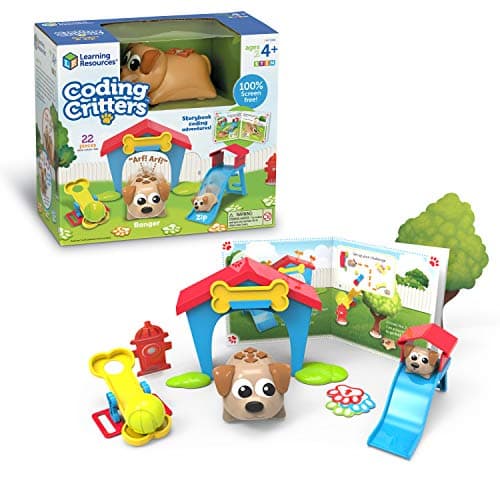
Coding Critters Ranger & Zip publishes a 22-piece set — an interactive pet, a playset and a storybook of coding activities — with 100% screen-free coding, rated 4+. The coding ceiling is low by design, because the published format is a storybook sequence rather than a programmable step count.
Block & Beaker earns a commission when you buy through our links, at no cost to you. It never changes a ranking, and we say so plainly when the right answer is the cheaper set, or nothing at all. Full disclosure · How we pick.
At a glance
The picks, ranked
Tap any row to jump to the full reasoning. Prices come live from Amazon where we have them and read “check price” where we don’t — never a number we cannot stand behind today.
| # | Product | Best for | Price |
|---|---|---|---|
| 1 | The product Coding Critters Ranger & Zip A genuinely charming first toy, as long as you are buying a pet rather than a robot. | Four, as a pretend-play toy that happens to introduce sequencing | |
| 2 | 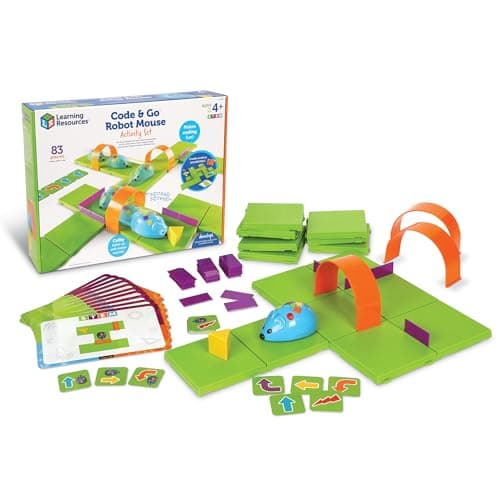 The actual coding toy at this age Code & Go Robot Mouse Activity Set 83 pieces, a rearrangeable 20-inch maze, and 30 picture-based cards requiring no reading. | Four and five, if coding is the goal | |
| 3 | 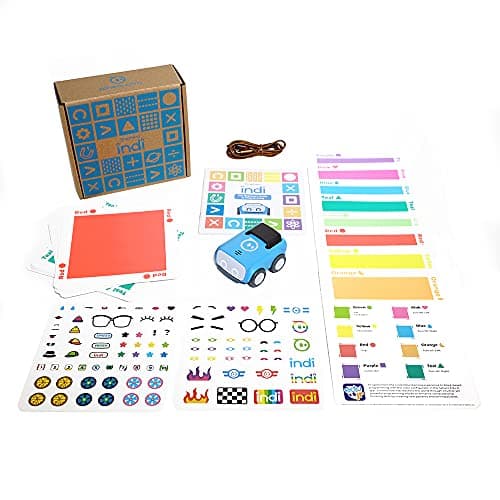 The one that grows Sphero indi At-Home Learning Kit Screen-free color cards at four, with published block coding on the same robot later. | Four to eight, with a path onwards | |
| — |  Not for four Botley 2.0 The Coding Robot Activity Set The obvious upgrade and it is rated a year later, with a button interface. | Five and up |
4 picks, including 1 we tell you to skip. Ages shown are the manufacturer’s own rating, not ours.
What we can tell you, and what we cannot
We have not used this set. No lab, no samples, no test children, no star rating here or in the structured data.
Published contents, format and age rating we can report and compare against the rest of the category. Whether a particular four-year-old falls in love with the pet — which is genuinely most of the value here — we cannot.
The specification that decides it
The arithmetic
Coding Critters Ranger & Zip, published
| Set size | 22 pieces |
|---|---|
| Screen required | None — 100% screen-free coding |
| Format | Interactive pet plus playset and a storybook of coding activities |
| Stated age | Ages 4+ |
| Consumables | None |
| Published step ceiling | None stated |
What “coding” means on this box
This page exists partly to answer a question the packaging raises. Several products in this aisle use the word coding for quite different things.
A programmable robot publishes a maximum sequence length. The child builds a program, runs it, and sees where it went wrong.
A storybook coding toy asks the child to follow a narrative instruction. The sequencing idea is present; the debugging loop mostly is not, because there is no program to be wrong.
Coding Critters is firmly the second, and Learning Resources describes it accurately. The confusion comes from shelf placement rather than from the manufacturer.
What it does well
Screen-free with no setup. No app, no account, no batteries listed as required. It works the moment it is unwrapped, which at four is worth a great deal.
The pet is the product. Twenty-two pieces including a playset means this survives as pretend play long after the coding activities are done. That is a real answer to the retention question, just not the answer the box leads with.
Nothing runs out. No consumables, so the only limit is interest.
Who should skip it
A buyer whose goal is coding. Buy the Robot Mouse. Same maker, same 4+ rating, and it publishes an actual programmable format.
A five or six-year-old. The storybook framing lands as babyish quickly, and there is no ceiling to grow into.
A household that wants one purchase to last. The published coding ceiling is low. Sphero indi publishes a path onwards on the same hardware.
Say the unwelcome thing
Do not buy this as a first step towards programming
It is a first step towards enjoying a toy, which is a fine thing to buy. But a child who finishes the storybook has no next rung here — there is no published step count to push against and no upgrade path.
If the intent is a coding ladder, start on a toy that publishes one: from coding toy to real code.
Where it sits
Coding Critters appears in screen-free coding toys and on the four-year-old page.
In full
Every pick, and what is wrong with it
Published specifications only, each linked back to the page it came from. Where a manufacturer publishes nothing, the row says so — we do not fill blanks in.
1. The product
Coding Critters Ranger & Zip
Learning Resources · LER3081 · maker rates it 4+
A genuinely charming first toy, as long as you are buying a pet rather than a robot.
- Set size
- 22 pieces
- Screen required
- None — “100% screen-free coding”
- Format
- Interactive pet plus playset and a storybook of coding activities
- Stated age
- Ages 4+
Learning Resources publishes a 22-piece set comprising an interactive pet, a playset and a storybook of coding activities, described as 100% screen-free, rated 4+, with no consumables.
The honest description is that the coding here is a narrative device. A child follows a story, and the story asks them to send the pet somewhere. That is a real introduction to sequencing and it is not programming in the sense a robot with a published step limit means it.
What it does well is the half nobody counts. The pretend play carries on long after the coding activities stop, and a four-year-old who has adopted a toy pet will use it for a year regardless of what the box says about STEM.
Replay signal
- Open-ended or one-shot
- Half toy, half coding set — the pretend play carries on long after the programming stops
- Does anything run out
- Nothing runs out
- Room to grow
- Little: the coding ceiling here is low by design
- Adult required
- The storybook is read-aloud at four; the pet is not
Why we say so: Learning Resources publishes the 22-piece count, the screen-free format and the storybook-led activity structure. We call the coding ceiling low because the published format is a storybook sequence rather than a programmable step count — compare Botley's published 150-step maximum.
What’s wrong with it
No published step ceiling, so there is nothing to grow into once the storybook is finished.
| Set size | 22 pieces |
|---|---|
| Screen required | None — “100% screen-free coding” |
| Format | Interactive pet plus playset and a storybook of coding activities |
| Stated age | Ages 4+ |
| Consumables | None |
Every figure above is from Learning Resources, Coding Critters. Blanks are shown as “not published” rather than filled in.
2. The actual coding toy at this age
Code & Go Robot Mouse Activity Set
Learning Resources · LER2831 · maker rates it 4+
83 pieces, a rearrangeable 20-inch maze, and 30 picture-based cards requiring no reading.
- Set size
- 83 pieces
- Contents
- Colby the robot mouse, 16 maze grids, 22 maze walls, 3 tunnels, 30 double-sided coding cards, 10 activity cards, cheese wedge, activity guide
- Maze size
- The 16 grids build a 20″ x 20″ board
- Screen required
- None
Learning Resources publishes 83 pieces including 16 rearrangeable maze grids forming a 20 × 20 inch board, 22 walls, 3 tunnels, 30 double-sided picture-based coding cards and 10 activity cards, rated 4+, needing three AAA batteries.
Same manufacturer, same age rating, completely different product. If the buyer’s intent is “teach my four-year-old to code,” this is the purchase.
Replay signal
- Open-ended or one-shot
- The mouse is fixed, but the maze is not — 16 grids and 22 walls is a new problem every time
- Does anything run out
- Nothing runs out
- Room to grow
- The 10 activity cards are a starting ladder; after that the child sets the puzzles
- Adult required
- Reading is not required — the coding cards use directional symbols, so a four-year-old can work alone
Why we say so: Learning Resources publishes the 83-piece contents including 16 rearrangeable grids and 22 walls, and states the cards are picture-based. A rearrangeable maze is why this does not become a solved puzzle after one weekend.
What’s wrong with it
Less charming — it is equipment rather than a character.
| Set size | 83 pieces |
|---|---|
| Contents | Colby the robot mouse, 16 maze grids, 22 maze walls, 3 tunnels, 30 double-sided coding cards, 10 activity cards, cheese wedge, activity guide |
| Maze size | The 16 grids build a 20″ x 20″ board |
| Screen required | None |
| Batteries | 3 x AAA (not included) |
| Stated age | Ages 4+ |
Every figure above is from Learning Resources, Code & Go Robot Mouse Activity Set. Blanks are shown as “not published” rather than filled in.
3. The one that grows
Sphero indi At-Home Learning Kit
Sphero · indi · maker rates it 4+
Screen-free color cards at four, with published block coding on the same robot later.
- Contents
- 1 indi robot, 30 color cards, charging cable, 2 sticker sheets, activity booklet, tape to fix the cards down
- Card mix
- 5 green, 4 yellow, 3 red, 2 purple, 3 teal, 3 orange, 5 blue, 5 pink
- How it is coded
- An on-board color sensor reads the cards; no screen needed
- Play time
- “2+ hours of play on a full charge”, USB charging
Sphero publishes an on-board color sensor, 30 color cards with an exact color breakdown, 2+ hours per charge over USB, and optional drag-and-drop block coding in the free Sphero Edu Jr app, rated 4 and up.
The published upgrade path is what Coding Critters most conspicuously lacks. Buying indi at four means not buying a second robot at seven.
Replay signal
- Open-ended or one-shot
- Very open-ended for the age: the child lays the track out across the whole floor
- Does anything run out
- Nothing runs out; recharges by USB
- Room to grow
- Screen-free cards first, then the same robot accepts block coding in the free app when the child is ready
- Adult required
- Not after setup — the program is the floor, and the child builds it
Why we say so: Sphero publishes the 30-card color breakdown, the on-board color sensor as the programming method, the 2+ hours per charge, and the optional step up to drag-and-drop blocks in Sphero Edu Jr.
What’s wrong with it
Programming means taping 30 cards to a floor.
| Contents | 1 indi robot, 30 color cards, charging cable, 2 sticker sheets, activity booklet, tape to fix the cards down |
|---|---|
| Card mix | 5 green, 4 yellow, 3 red, 2 purple, 3 teal, 3 orange, 5 blue, 5 pink |
| How it is coded | An on-board color sensor reads the cards; no screen needed |
| Play time | “2+ hours of play on a full charge”, USB charging |
| Optional app | Sphero Edu Jr drag-and-drop blocks |
| Stated age | Ages 4 and up |
Every figure above is from Sphero, indi At-Home Learning Kit. Blanks are shown as “not published” rather than filled in.
Skip this one
Botley 2.0 The Coding Robot Activity Set
Learning Resources · LER2938 · maker rates it 5+
The obvious upgrade and it is rated a year later, with a button interface.
- Set size
- 78 pieces
- Contents
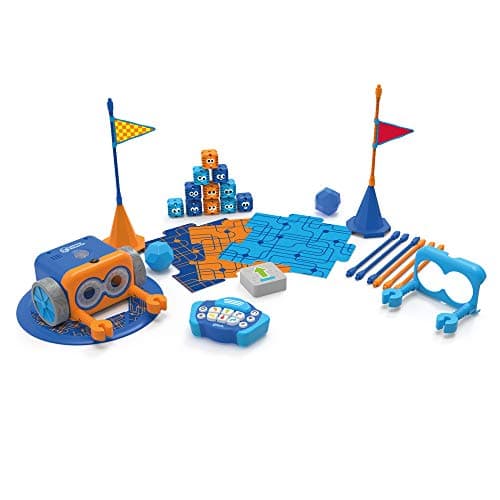
- Botley 2.0, remote programmer, 2 face plates, 40 coding cards, 6 double-sided boards, 27 obstacle pieces, starter guide
- Maximum program length
- “coding sequences of up to 150 steps”
- Movement
- Six directions, plus 16 coded interactions
Learning Resources publishes 78 pieces, sequences up to 150 steps, six directions of movement, 16 coded interactions and 27 obstacle pieces, rated 5+.
Bought for a four-year-old as an upgrade from Coding Critters, it is a year early: a button remote is a genuine step above following a storybook, and the 150-step ceiling means nothing to a child who cannot yet build a five-step sequence.
Replay signal
- Open-ended or one-shot
- Open-ended once the cards are understood — the child builds the maze, not just the program
- Does anything run out
- Nothing runs out except batteries
- Room to grow
- A 150-step ceiling means the challenge scales for years past the first week
- Adult required
- Needed for the first session, then not — there is no app account and nothing to log into
Why we say so: Learning Resources publishes the 78-piece contents, the 150-step maximum sequence, the six directions and 16 interactions, and states the set is 100% screen-free with no tablet or app required.
What’s wrong with it
Rated 5+, and five AAA batteries not included.
| Set size | 78 pieces |
|---|---|
| Contents | Botley 2.0, remote programmer, 2 face plates, 40 coding cards, 6 double-sided boards, 27 obstacle pieces, starter guide |
| Maximum program length | “coding sequences of up to 150 steps” |
| Movement | Six directions, plus 16 coded interactions |
| Screen required | None — “100% screen-free play” |
| Batteries | “Requires 5 AAA batteries (not included)” |
| Stated age | 5+ (K-2nd grade) |
Every figure above is from Learning Resources, Botley 2.0 Activity Set. Blanks are shown as “not published” rather than filled in.
We are not putting a buy button on this one. It is easy enough to find if you want it anyway — but we would rather send you to something that gets played with twice.
Questions people actually ask
Frequently asked
Do Coding Critters actually teach coding?
They introduce sequencing through a storybook, which is a real idea. What they do not do is publish a programmable step count the way Botley publishes a 150-step maximum — so there is no program to get wrong and no debugging loop. Learning Resources describes the format accurately; the confusion comes from shelf placement.
What age are Coding Critters for?
Learning Resources publishes 4+. It works well at exactly four and dates quickly after that — the storybook framing reads as babyish to a five or six-year-old, and there is no published ceiling to grow into.
Coding Critters or the Robot Mouse?
Same manufacturer, same 4+ rating, different products. Buy Coding Critters if you want a charming pretend-play toy that introduces sequencing. Buy the Code & Go Robot Mouse if the goal is coding — it publishes 83 pieces, a rearrangeable maze and 30 picture-based cards requiring no reading. Robot Mouse review.
Do Coding Critters need batteries or an app?
Learning Resources publishes it as 100% screen-free with no app required, and lists no consumables. It works the moment it is unwrapped, which at four is genuinely valuable.
Sources
Where these figures came from
Every specification on this page traces to one of these. If a manufacturer publishes nothing on a point, the page says so rather than filling the gap.
Read next
Where to go from here
Back to Reviews, or read how we pick.